Operational Risks Unique to Healthcare Facilities
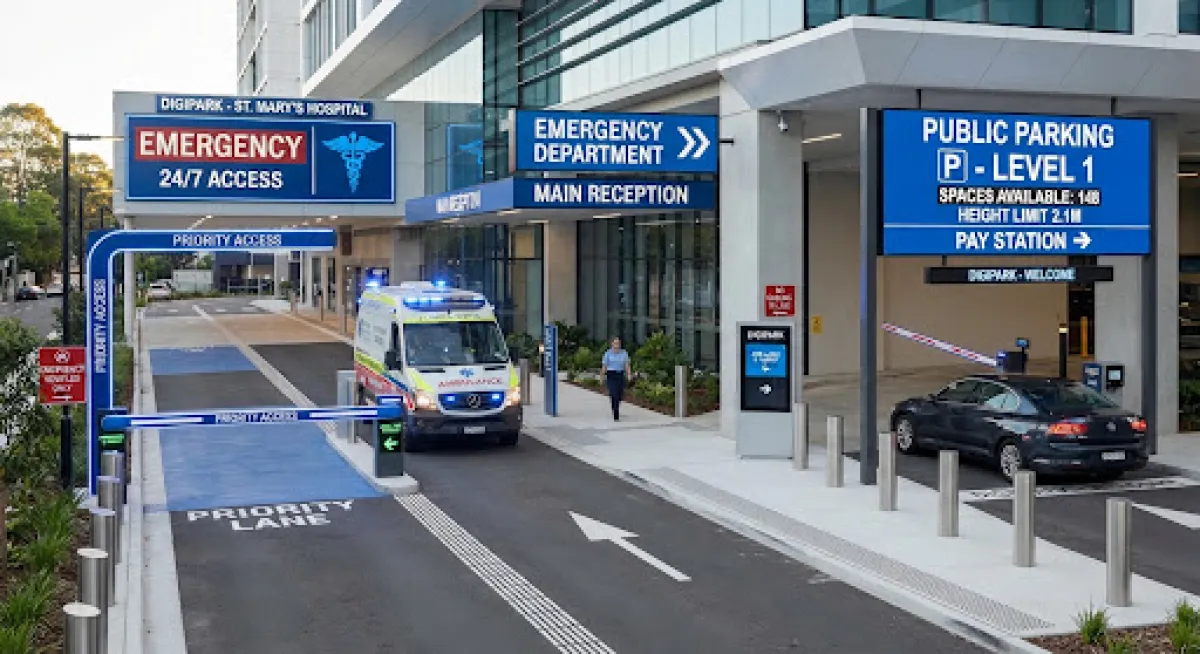
Hospital parking carries a burden that commercial buildings do not: the ambulance lane cannot be blocked for even a second, while outpatient visitor volume fluctuates heavily throughout the day.
Four Design Principles for Healthcare Facility Parking Systems
Gate configuration, sensor placement, and override procedures should be documented together with the occupational health & safety (K3) team and facility management.
- A dedicated emergency lane with long-range RFID UHF.
- Dynamic slot allocation based on occupancy sensors.
- Patient tariff validation integrated with the cashier counter.
- Power redundancy and an emergency-open mode.
Periodic Auditing and Reporting
Emergency lane access logs, override history, and patient tariff reconciliation need to be reviewed monthly. DPS Console provides export-ready reports for both internal and external audits.